7 Best Fractional CMO Companies Compared by Pricing
Forget picking the biggest logo first. The key question is which of the best fractional CMO companies fits your payment model, your runway, and the work you can truly measure. I've ranked this list by terms you can check before a sales call, including published monthly price, billing unit, minimum commitment, income thresholds, and whether pay can be tied to milestones or outcomes. Where a firm publishes nothing, I say so, because that silence changes your negotiating job.
Get those terms in writing early, and use affordable contract signing for independent consultants or your own counsel to lock acceptance criteria before work starts. A sharp strategy deck won't protect cash if the contract pays for elapsed time regardless of delivery.
Table of Contents
- 1. Capstacker
- 2. Kalungi
- 3. Marketri
- 4. Chief Outsiders
- 5. Chameleon Collective
- 6. CMOx
- 7. The fCMO Agency
- How the seven options compare on published pricing, pricing structure, and commitment terms
- Check the Commitment Before the Pitch
1. Capstacker
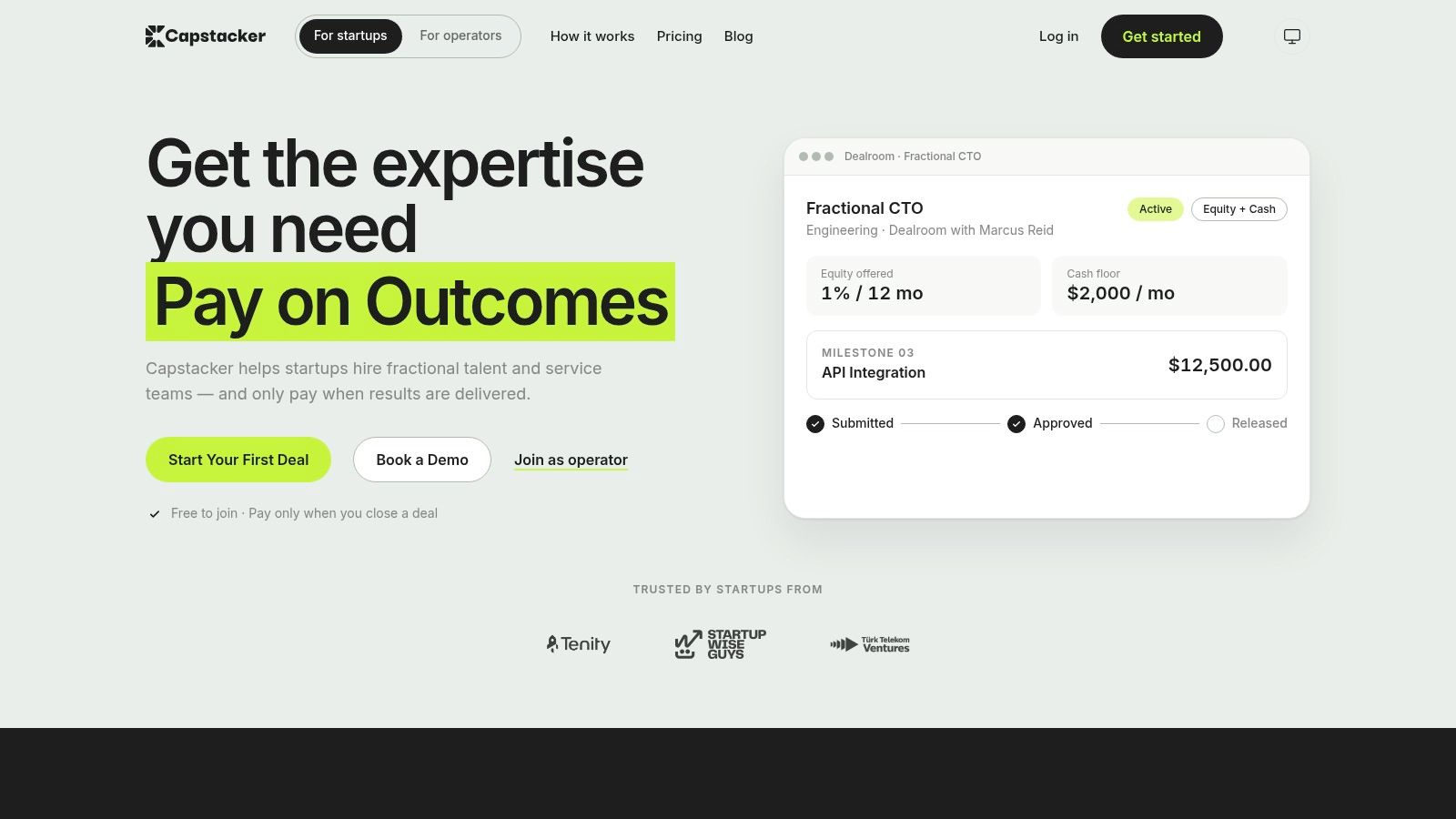
Capstacker is different from the firms below because it's built around deal structure, not selling you a named executive team. You can bring an operator you already know or use optional introductions, then set pay around milestones, revenue share, equity, or a hybrid of cash and upside. For a pre-seed to Series A founder, that's useful when you need senior judgment but can't justify a flat retainer that runs whether positioning ships or not.
How payment actually works
Milestones are agreed upfront and payment is triggered when work is accepted. A missed milestone doesn't trigger payment. The site describes a 10-day review window, with work accepted if you don't respond in time, invoices due within 15 days, and ownership transferring upon payment.
That structure matches the better contract practice in a publicly available independent-contractor agreement template, which lets contractors invoice when milestones in a statement of work are completed. Define completion, approver, evidence, and partial-completion treatment before signing.
- Timeline: Capstacker says a typical deal takes 1 to 2 weeks from initial match to signed agreement.
- Platform cost: Startups pay a subscription, operators join free and pay only when they close a deal, see Capstacker pricing and access for the model.
- What's missing: Subscription and optional introduction prices aren't specified in the information provided, and there are no named customer testimonials to verify outcomes.
My read: Best fit when payment design is your main risk, weakest evidence when you want named references before paying anything.
2. Kalungi
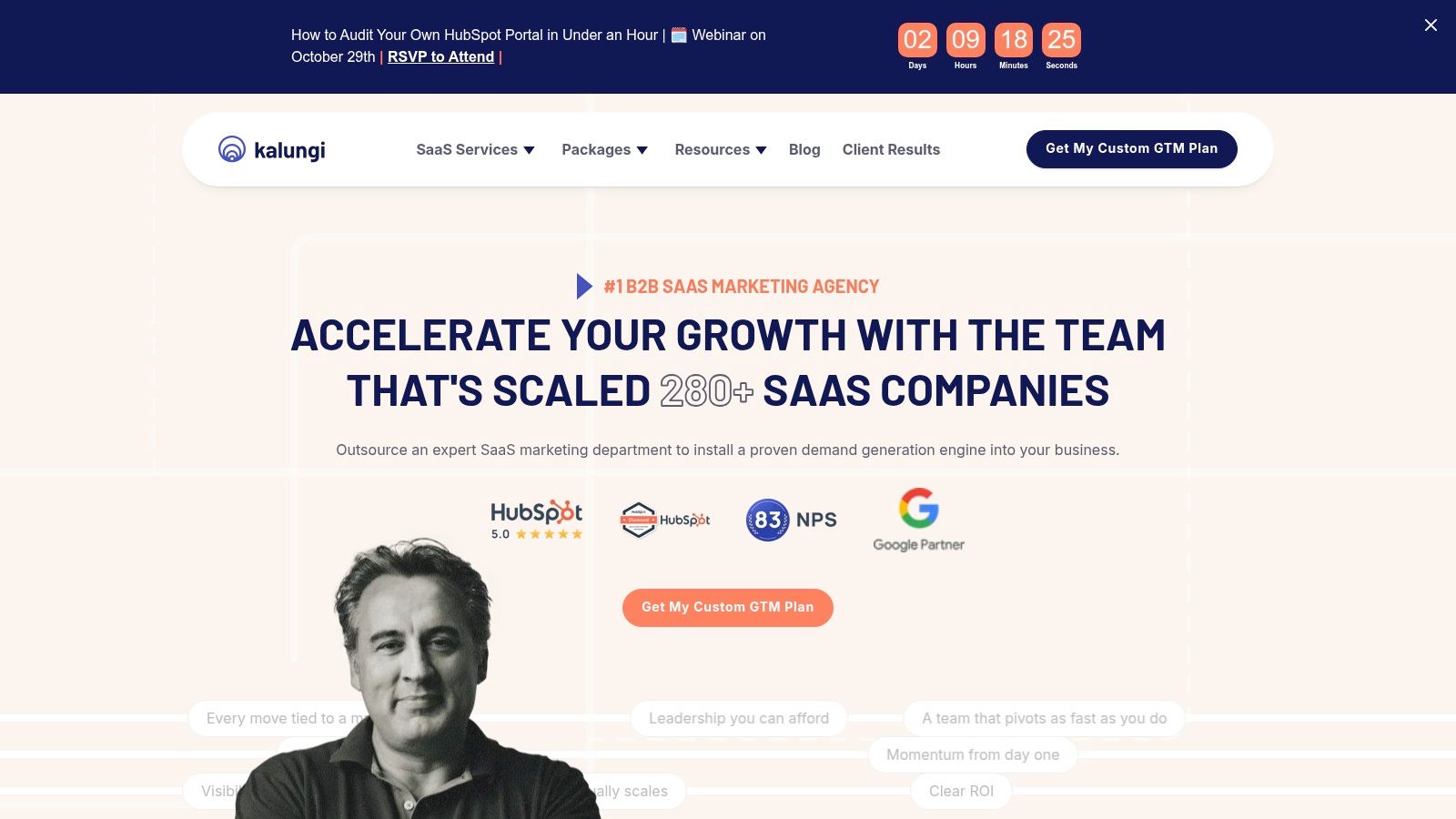
If you're B2B SaaS and short on execution hands, Kalungi is the cleanest specialist bet here. It offers CMO-as-a-Service with specialists across content, SEO, paid media, and marketing operations, and the CMO can join leadership meetings. That means you're buying a connected strategy and delivery motion, not just advice you'll struggle to staff.
The checkable price is narrow. CMO coaching starts at around $2,500 per month, which suits a team that can already execute. Anything broader is quote-based, with no published minimum term, milestone option, or exit language to compare before a call.
Where the contract needs work
Ask what's included in coaching versus full service, who owns channel targets, and whether specialist time is capped. Also ask if any fee can move from monthly retainer to accepted deliverables such as positioning, a demand plan, or measurement setup.
- Strength: Focused B2B SaaS leadership plus execution capacity.
- Gap: No public price for the full engagement most early teams need.
- Risk: You may buy more agency than a standalone fractional CMO problem requires.
I wouldn't sign a broad Kalungi scope without a 30, 60, and 90 day deliverable list priced separately from ongoing access.
3. Marketri
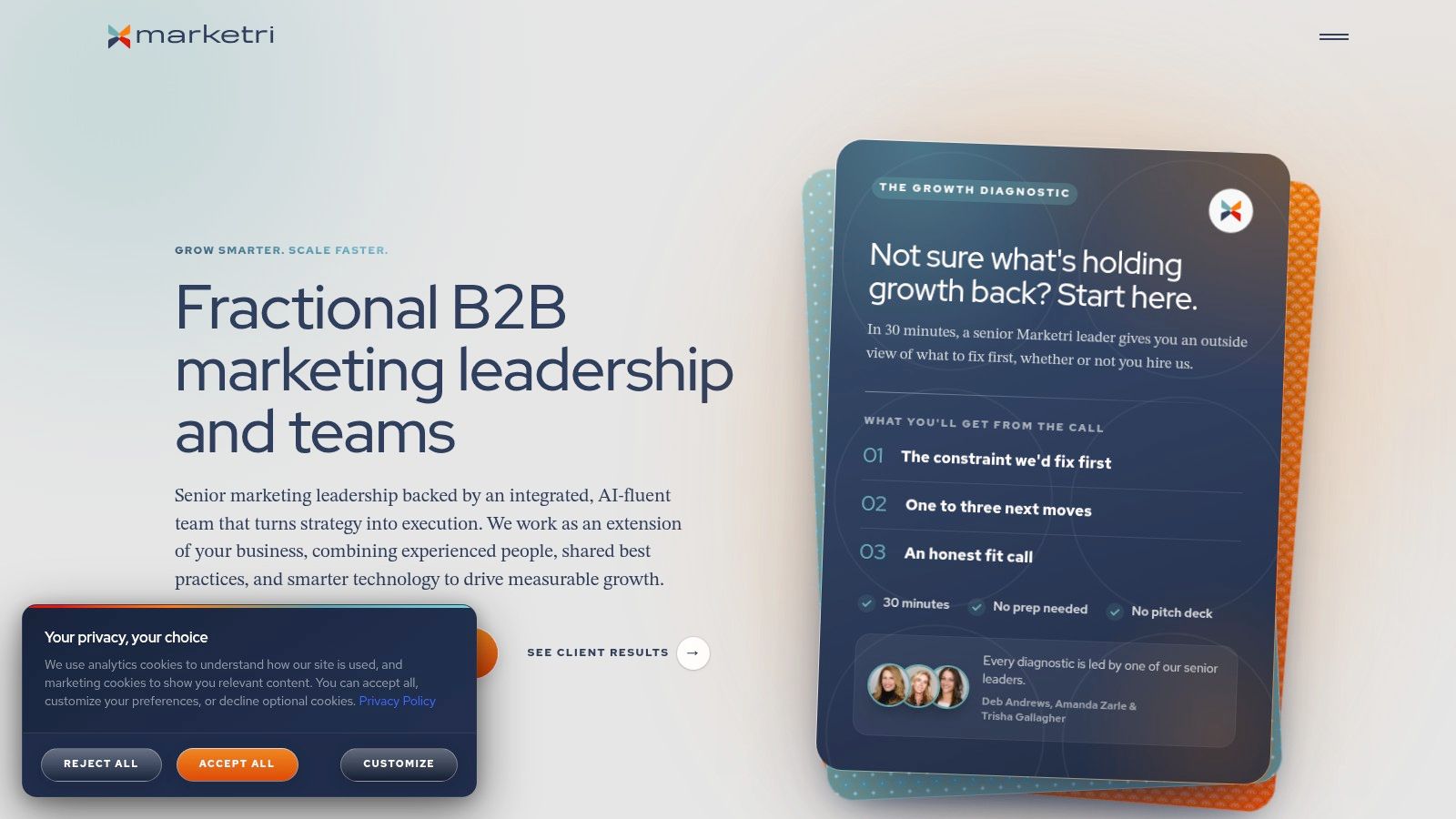
Marketri publishes the two numbers most founders ask for first, $7,500 to $20,000 per month and a six-month minimum engagement. That transparency is genuinely helpful. It's also the warning, because at the low end you're committing to a meaningful cash outlay before you know whether fit, product, or sales follow-up will support results.
The model pairs fractional CMO leadership with specialist execution across strategy, positioning and messaging, budget oversight, analytics, and reporting. Sectors include professional services, financial services, technology, healthcare, and SaaS, so it's a broader B2B practice rather than a SaaS-only shop.
For context, published 2026 market benchmarks place the wider retainer market at about $5,000 to $22,000 per month. Marketri sits inside that range, but the minimum term makes total exposure, not the monthly number, the more meaningful comparison.
A transparent price with a long minimum is still a long commitment. Negotiate a review gate and termination right before you celebrate the rate.
If you've got revenue and an internal team that needs direction, Marketri can work. If you're pre-revenue and only need occasional executive advice, this is likely too much structure and too much term.
4. Chief Outsiders
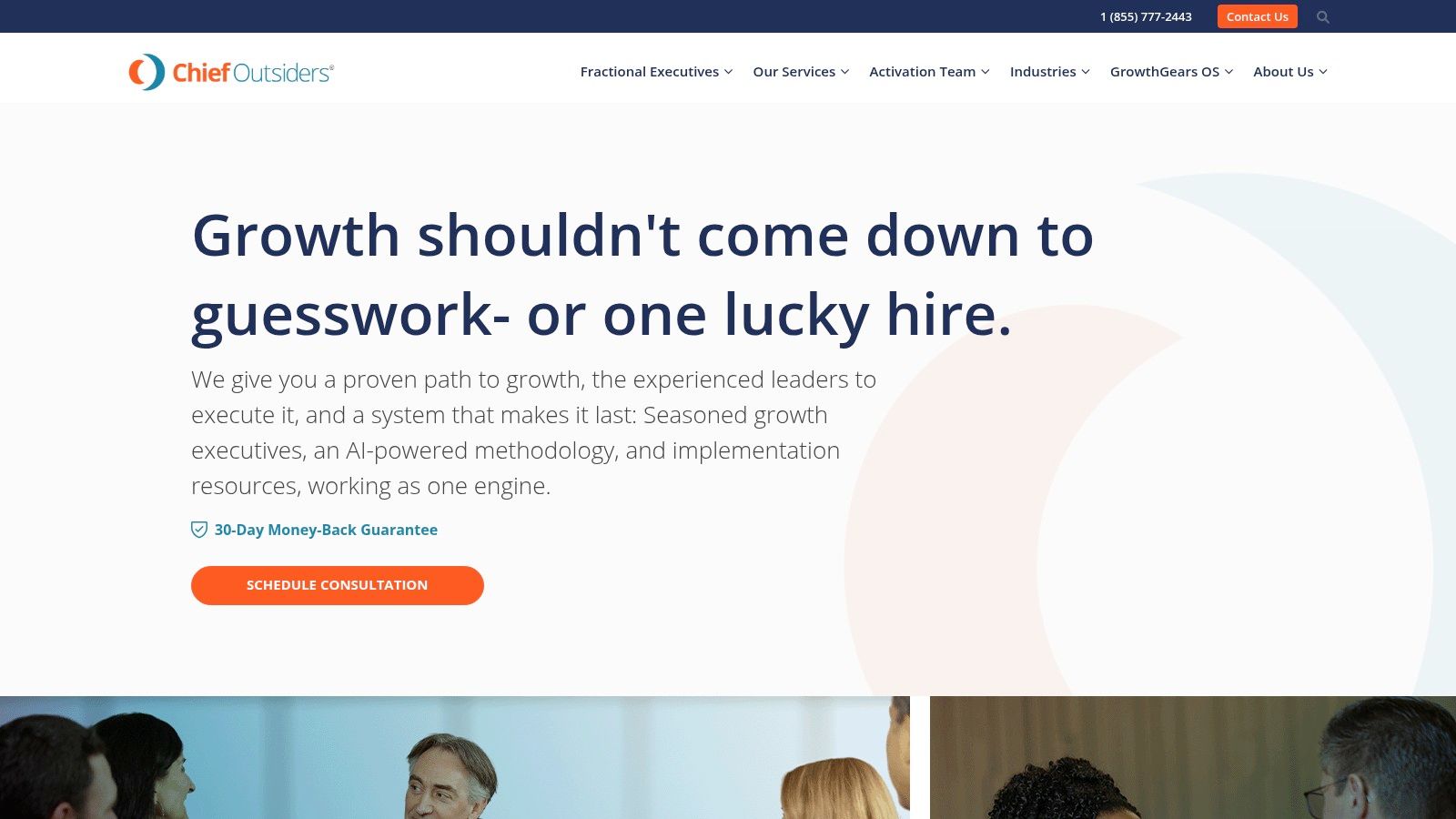
Chief Outsiders sells fractional CMOs who join leadership teams and work on growth, go-to-market strategy, and execution. Its sector spread covers SaaS and technology, consumer products, healthcare, financial services, and manufacturing. If your problem needs pattern recognition from a larger company, that breadth can help.
What you can't check publicly is the money. Pricing isn't listed, and neither are a standard minimum, billing unit, or outcome-based option. Before debating fit, benchmark any quote against our breakdown of the fractional CMO hourly rate so hours, seniority, and team management aren't blended into one vague number.
Questions that expose fit
- Named executive: Who attends your leadership meetings, not just who sells the deal?
- Comparable stage: Has that person worked at your revenue level and sales cycle length?
- Accountability: Which outputs do they own in the first 90 days, and which depend on your team?
The structured matching process and team support beyond one executive are real advantages for mid-market companies. For a pre-revenue startup, I'd worry you're importing enterprise habits and reporting weight you don't need yet. Don't let breadth substitute for stage-specific proof.
5. Chameleon Collective
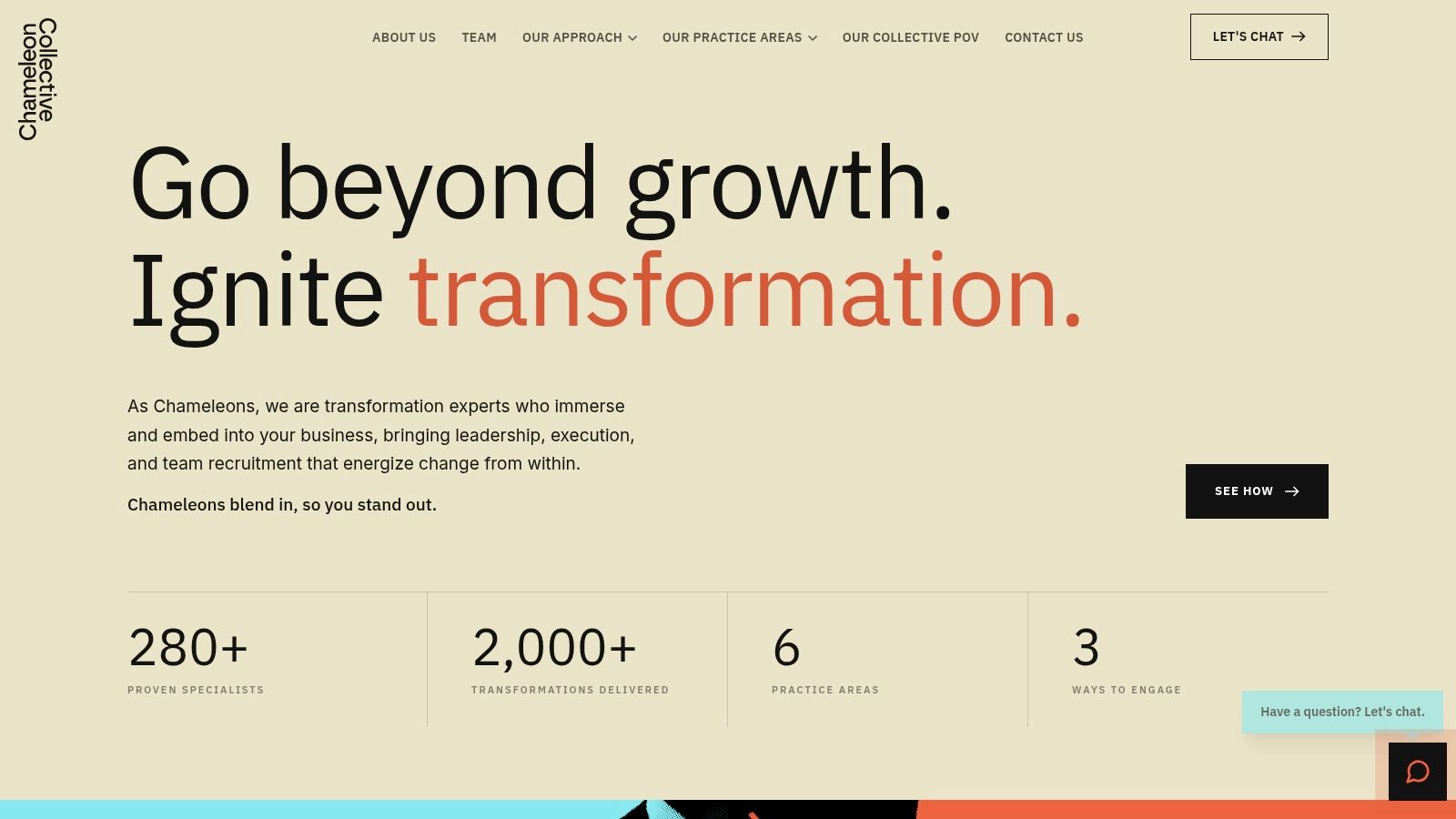
At $20,000 to $45,000 per month, Chameleon Collective is the most expensive published range on this list. That doesn't make it bad. It makes your diligence bar much higher, especially when a 2024 survey of 250 fractional professionals published by Simplified found 40% charged $5,000 to $8,000 per month.
What you're paying for is direct involvement from a senior CMO operator across strategy, budget allocation, marketing cadence, agency management, and executive reporting. Additional collective members can be scoped in for specialist execution, so the model can expand without your hiring each role.
I like that Chameleon publishes pricing and describes an exit and handoff process. Too many engagements pretend handoff will sort itself out later. Still, check whether specialists are included or additive, what weekly CMO time you really get, and how the advertised operating model maps to your contract.
Budget rule: If the retainer forces you to cut the media, staff, or product work the CMO needs to succeed, the engagement is structured to disappoint both sides.
For a funded company needing an embedded senior operator now, it may fit. For most early-stage founders, the starting price alone should end the conversation.
6. CMOx
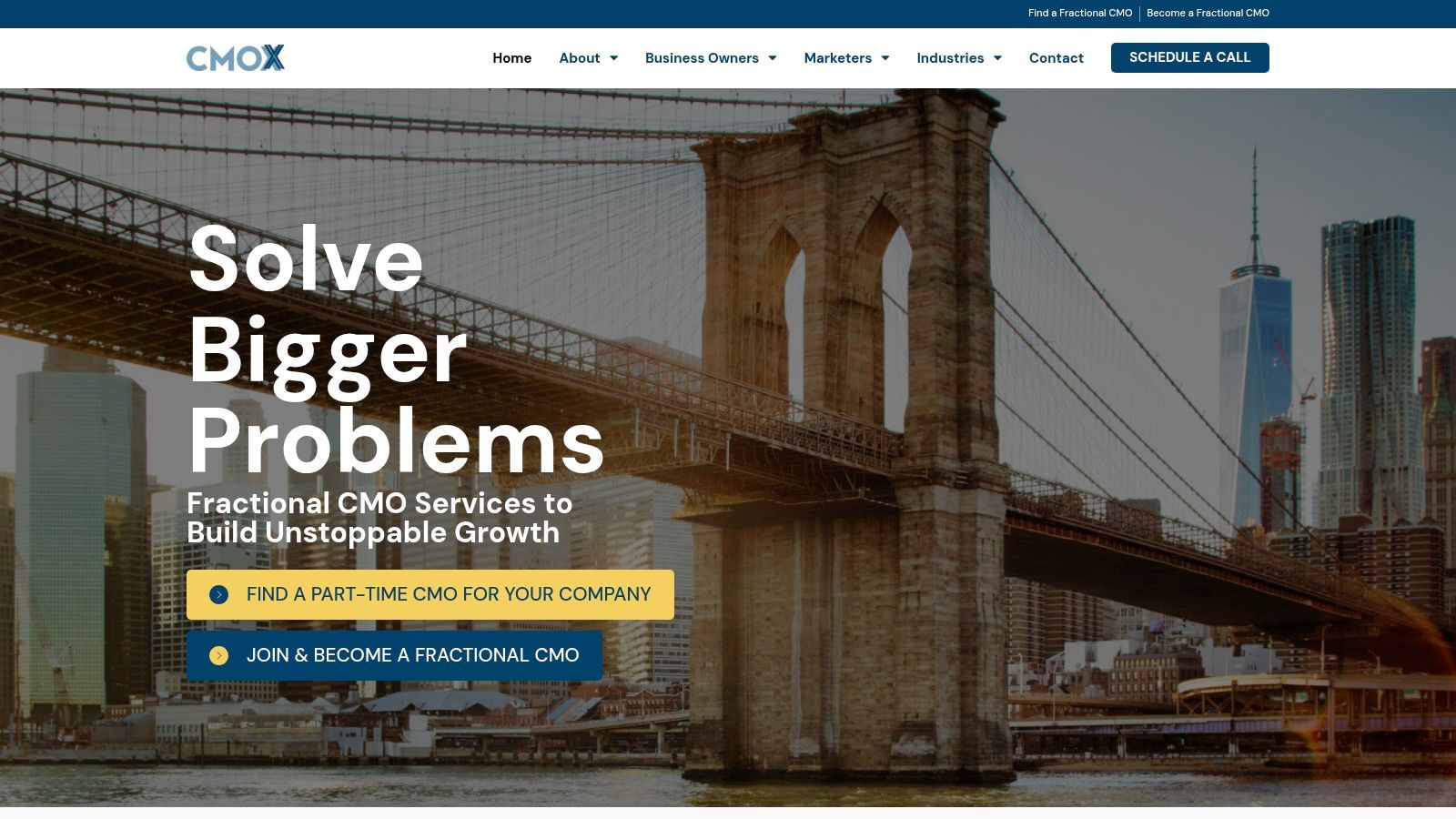
CMOx is easy to compare because it separates advice from ongoing leadership. CMO Advisor starts from $3,000 per month and CMO Engaged starts from $7,000 per month, with Engaged described as roughly ten hours per week. That clarity helps you avoid paying embedded-executive money for occasional guidance.
Engaged can include translating leadership goals into marketing objectives, supporting team needs, and reporting on agreed KPIs. CMOx says that package is aimed at businesses with at least $1 million in annual income, which filters out very early companies instead of selling them anyway. I respect a published threshold more than a fit call designed to close everyone.
Compare any quote against overall executive cost, not just the retainer, because independent salary data for chief marketing officers places the average U.S. chief marketing officer base salary at $159,648, before overhead.
- Strength: Defined tiers, weekly allocation, and KPI reporting.
- Gap: Clarify the billing unit and deliverables for the strategy-session listing.
- Contract ask: Tie KPI reporting to metrics the CMO can materially influence.
Revenue alone is a messy trigger when pricing, product conversion, and sales follow-up sit elsewhere.
7. The fCMO Agency
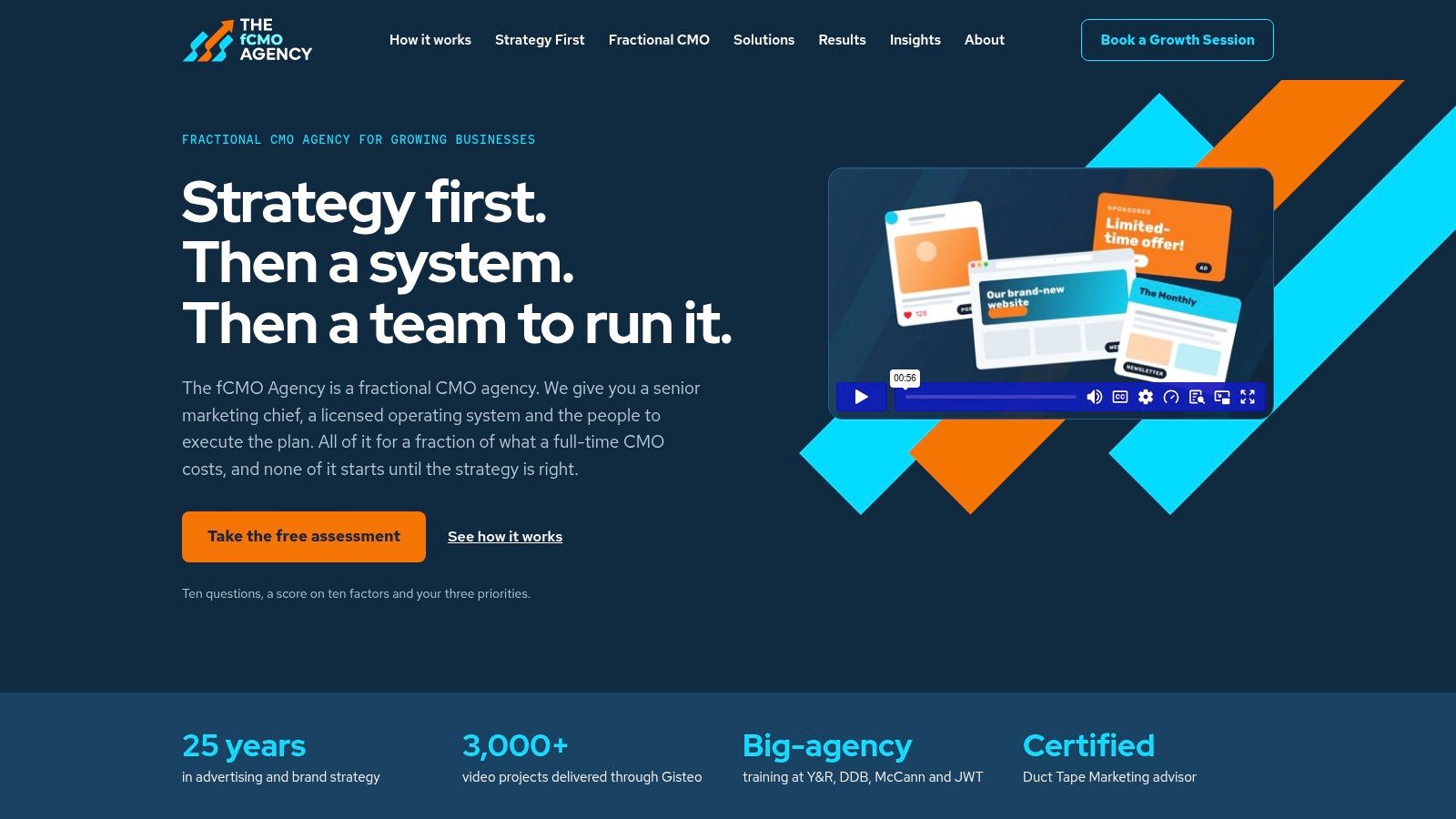
The fCMO Agency publishes monthly options from $2,500 to $10,000, the lowest entry point here alongside coaching-style offers. It pairs fractional CMO leadership with a licensed Marketing Operating System, so you're also buying a cadence, an initial strategy, a 90-day plan, workstream check-ins, scorecards, and quarterly planning.
Flexibility is the appeal. You can run the plan yourselves, have the agency direct your team and vendors, or add execution support. If you're still sorting out the basics, start with what fractional CMO meaning covers in scope and decision rights before assuming a system license equals executive ownership.
What to verify before the low price wins
- License dependency: What happens to the operating system, documents, and scorecards if you leave?
- Execution boundary: Which work is leadership, which is your team, and which costs extra?
- Market fit: Positioning leans toward growing businesses and professional services, so SaaS or marketplace founders should confirm relevant references.
Budgets are tight for real reasons, since Gartner's annual CMO spend snapshot reported 2025 marketing budgets held at 7.7% of company revenue. A cheaper tier only wins if the cadence produces decisions and shipped work, not recurring meetings.
How the seven options compare on published pricing, pricing structure, and commitment terms
| Item | Published Pricing | Pricing Structure | Commitment | Best For |
|---|---|---|---|---|
| Capstacker | Subscription and introduction fees not specified | Platform subscription; deals can use milestones, revenue share, equity, or hybrid compensation | No minimum term stated; payments tied to accepted milestones | Startups seeking outcome-based access to fractional executives or specialist teams |
| Kalungi | CMO coaching from around $2,500 per month; broader engagements quote-based | Coaching or CMO leadership combined with specialist execution | Not specified | B2B SaaS teams seeking marketing leadership and execution support |
| Marketri | $7,500–$20,000 per month | Fractional CMO leadership with specialist execution support | Six-month minimum | B2B companies seeking ongoing marketing leadership and specialist support |
| Chief Outsiders | Not publicly listed | Fractional CMO leadership with team and operating support | Not specified | Mid-market businesses seeking growth strategy and execution |
| Chameleon Collective | $20,000–$45,000 per month | Fractional CMO leadership with optional specialist execution | Not specified; exit and handoff process described | Companies needing senior marketing leadership and flexible specialist capacity |
| CMOx | CMO Advisor from $3,000 per month; CMO Engaged from $7,000 per month | Advisory, strategy sessions, or ongoing fractional leadership; Engaged is about 10 hours per week | Package terms not specified | Businesses comparing advisory with ongoing CMO leadership, especially those earning at least $1 million annually |
| The fCMO Agency | $2,500–$10,000 per month | Fractional CMO leadership with client-led, agency-directed, or agency-provided execution | Ongoing cadence includes a 90-day plan and quarterly planning; minimum term not stated | Growing businesses seeking structured marketing leadership with optional execution support |
Check the Commitment Before the Pitch
The best fractional CMO companies for you are the ones whose commercial terms survive written questions. Don't compare strategy decks until every finalist answers the same five things, namely billing unit, minimum term, included executive time, whether any fee can move to milestones or revenue share, and how exit and handoff work. If a firm won't put those in writing, you've learned something important about accountability.
Start with capacity. Is the quote for advisory access, ten hours a week of embedded leadership, team management, or leadership plus specialist execution? Those aren't interchangeable, and a cheap advisory deal can look expensive once your team can't implement it. Likewise, a premium embedded deal can be fair if the CMO owns board reporting, hiring support, channel reviews, and a marketing number.
Then split controllable outputs from lagging outcomes. Positioning, ICP definition, messaging architecture, attribution setup, campaign cadence, and a launch plan can be accepted as deliverables. Revenue also depends on product, pricing, sales execution, budget, and data quality, so pure pay-for-results often rewards or punishes the wrong party. I prefer a modest retainer for access, milestone payments for accepted work, and a capped success fee only where attribution is clean.
Finally, test stage fit with references from companies like yours and a named 30, 60, and 90 day plan. Broad executive surveys can mislead small teams, because The CMO Survey 2025 topline report included 2,047 marketing leaders at U.S. for-profit companies but only 281 responded. Your contract needs evidence from your stage, not prestige borrowed from larger firms.
Ask for termination notice, revision rights, clawback or refund treatment, ownership transfer, and what happens to unfinished milestones if either side ends early. Those clauses decide whether fractional really stays flexible, or becomes the full-time cost you were trying to avoid.
If you've found the right CMO but don't want every payment riding on time spent, use Capstacker to set milestones, revenue share, equity, or hybrid terms upfront and track acceptance before money moves. Bring your own operator or ask for an introduction, get the acceptance window and payment trigger in the agreement, and start with a first milestone small enough to prove fit.